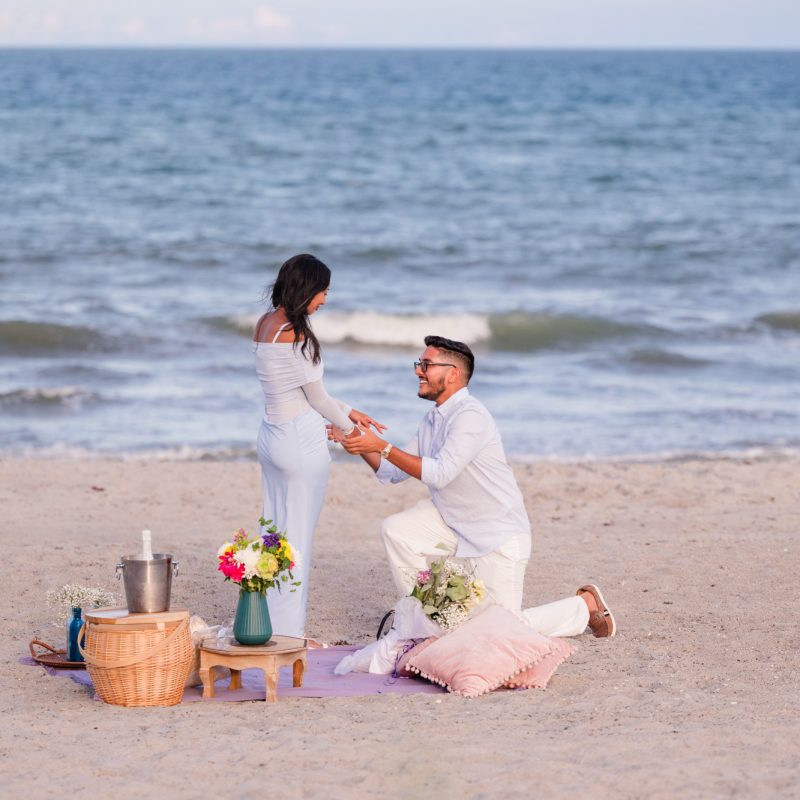
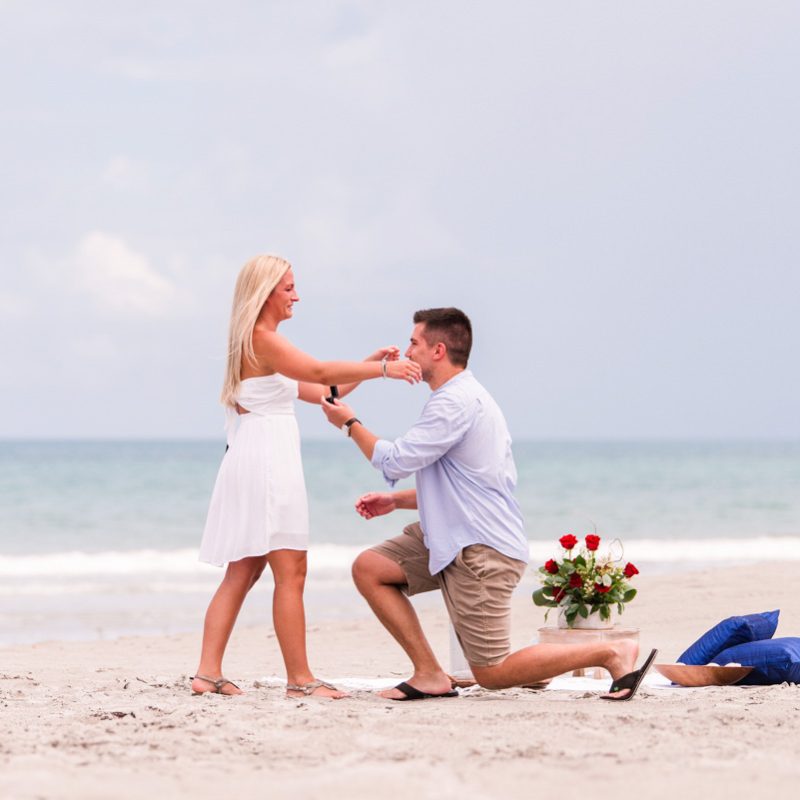
I live in Melbourne Beach, and I hide in the dunes for a living.
Not every day — but often enough that I’ve learned what makes a beach proposal go smoothly and what makes it go sideways. Most of it comes down to four or five decisions you make in advance, and almost none of it is the part people worry about.
So here’s everything, in the order you’ll need it.
1. Pick your time of day first
Before the spot, before the setup, before anything: decide whether you’re doing sunrise or sunset. Everything else follows from it.
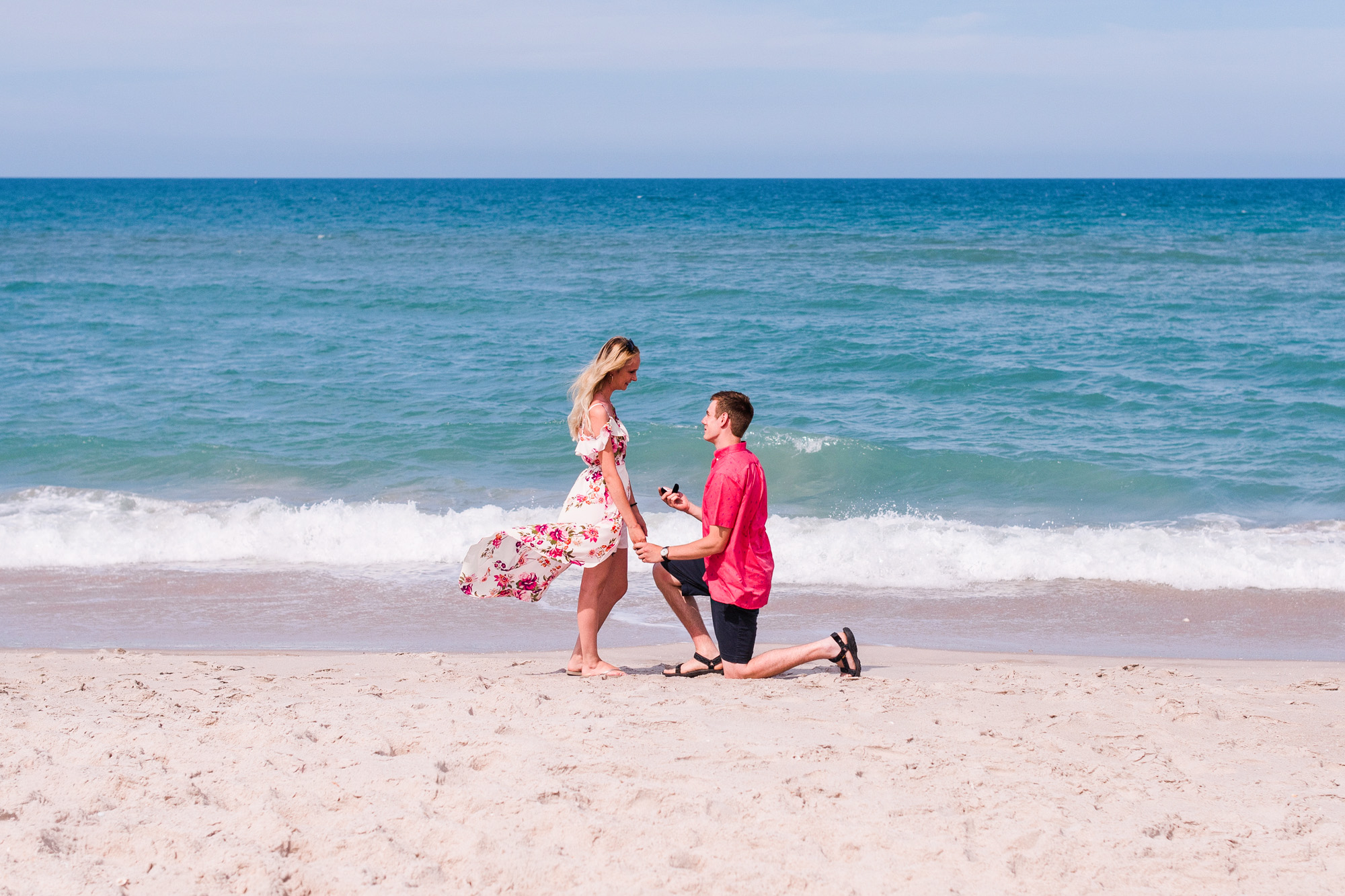
Sunrise means an almost empty beach. Nobody walking a dog through your photographs, nobody’s cooler in the background, and the light comes up behind you because we’re on the east coast. Depending on the cloud coverage you might have beautiful soft light or crazy bright light! The downside is that it’s early and your person has to be persuaded out of bed.
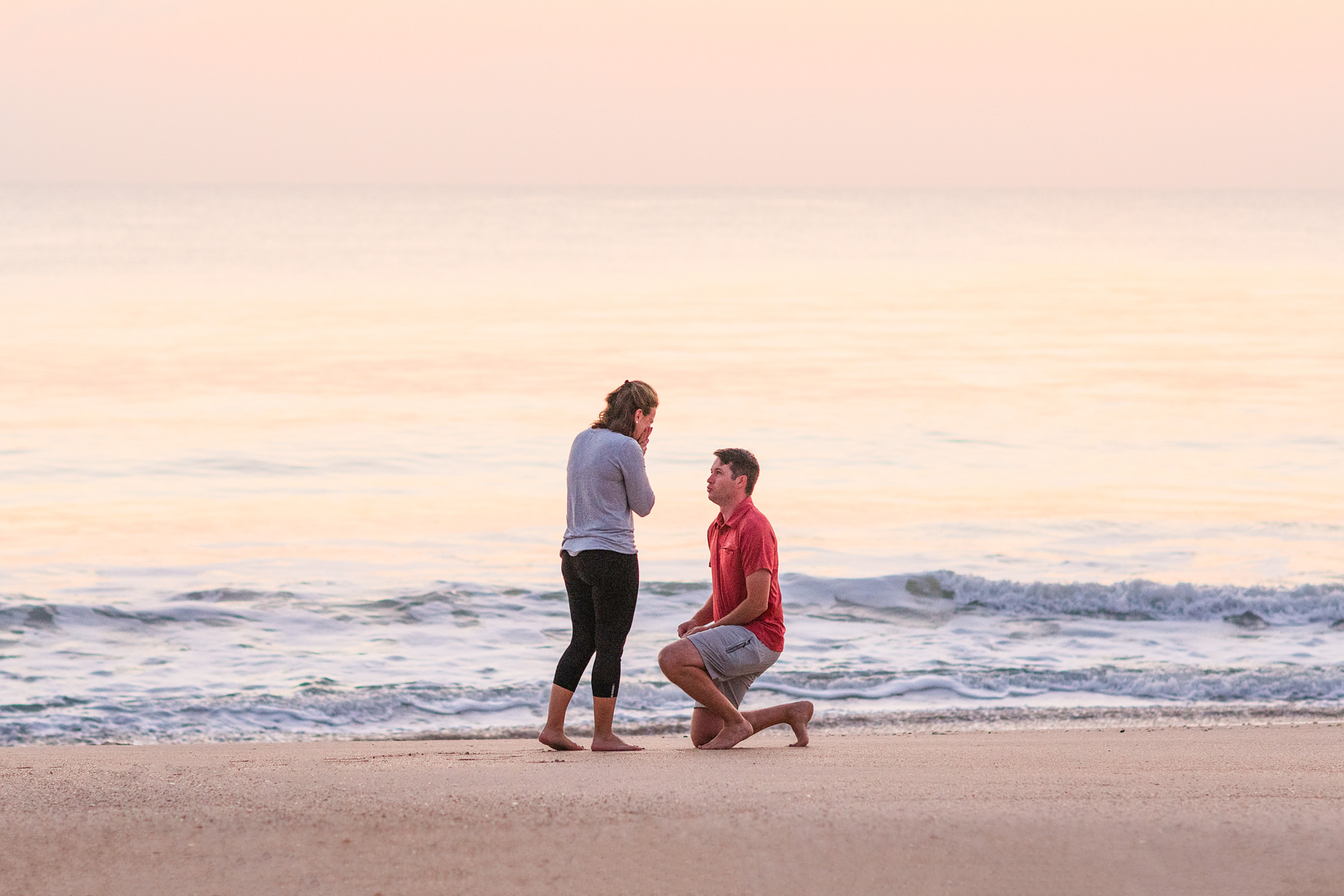
Sunset is easier to arrange — dinner reservations, a normal evening, a walk. The beach is busier (especially on the weekends), and the light comes from behind the dunes rather than off the water, which is beautiful in a different way.
Both work. I’ve done far more sunsets, but the sunrise ones tend to be the quiet, extremely intimate ones.
Then the tip that matters most:
Do not plan to propose exactly at sunset.
If you want the really soft light on the beach then forty-five minutes to an hour before sunset is perfect. Once the sun is down the light goes fast, and if we’ve used it all on the question there’s nothing left for the twenty minutes afterward — which is when you’ll be hugging, laughing, calling your parents, and looking at the ring. Those are the photographs you’ll actually live with.
Propose in the good light, and then we still have the good light.
2. Choose the spot
Any beach access on this coast will do, and that’s not me being vague — it’s genuinely true. What matters more than which beach is what’s behind you, how you get down to the sand, and how many people are on it.
Our beaches are narrow. This is the east coast of Florida, not the wide flat kind, and at high tide there’s a lot less room than you’re picturing. Check the tide chart for your date.
Here are the four I’d point you toward.
Spessard Holland North
My favorite, and the one I suggest first.
Parking is plentiful and it’s free — which, at sunset in season, is not nothing. Best of all there’s a ramp down to the sand instead of stairs, so nobody is picking their way down steps in nice shoes, and if a grandparent or anyone who’d rather avoid stairs is coming to watch from a distance, they can get there easily.
There are outdoor showers too, so you can rinse the sand off your feet before dinner.
Spessard Holland South
Also free to park, and also good. The difference is there are stairs down to the beach rather than a ramp — worth knowing before you pick your shoes, or if anyone is joining you. However, this location does have a nice boardwalk so if you do have spectators it is a perfect spot for them to sneak a little peek!
Ocean Avenue
The beach is a little wider here, which helps at high tide, and there’s a ramp down heading down to the beach.
Two things to plan around: parking is metered, so bring a card or the app, and this is the main access for Melbourne Beach — it gets busy, especially at weekends.
Avenue A
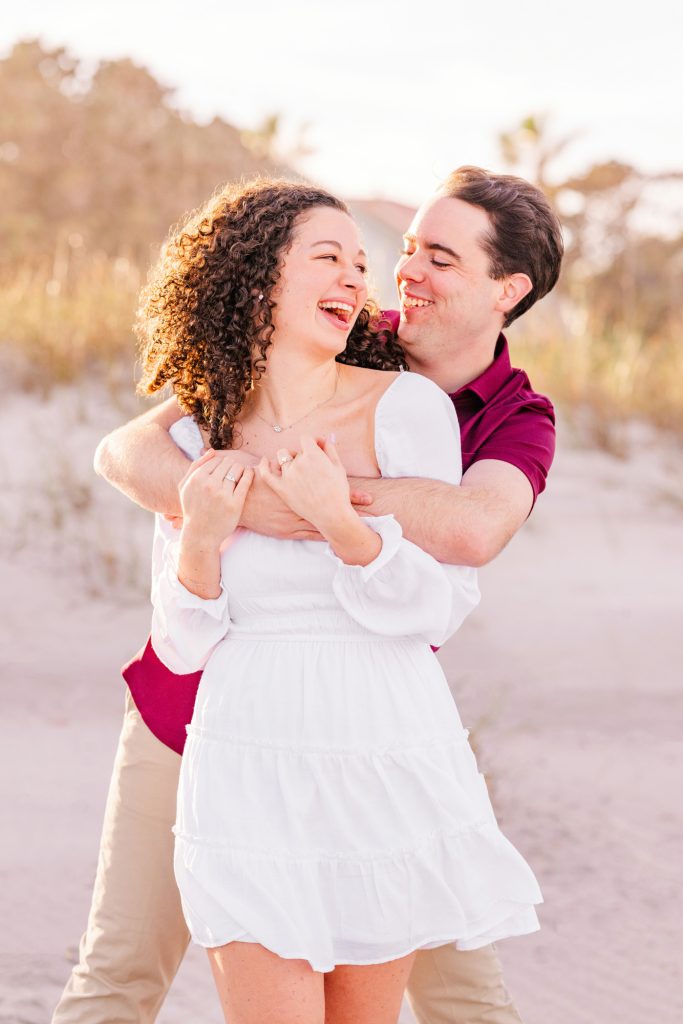
Ave A beach access has paid parking as well as stairs. But there’s a lovely little path through the dunes to get down to the beach, and walking your person along it is a nice way to arrive. Parking is a bit limited but it is a lesser known spot and I’ve never been there when the parking was totally full.
One last thing about the spot
I always go and look at the access before your date.
Beaches change. After a big storm a lot of seaweed washes up, and a stretch of sand that was beautiful last month can be covered in it — which is not what you want across the bottom of the photograph you’re going to hang on a wall.
So I check. If the spot we picked isn’t looking its best, we move a few hundred yards down the coast to one that is, and you don’t have to think about it.
Tell me where you’re thinking and I’ll tell you what it’s like at that hour — I’ve probably photographed there.
3. Decide how big it’s going to be
There are two kinds of people who call me about proposals.
The first wants thirty minutes, no setup, nothing announced. A walk on the beach that ends differently than expected. That’s a beautiful way to do it and I photograph a lot of them.
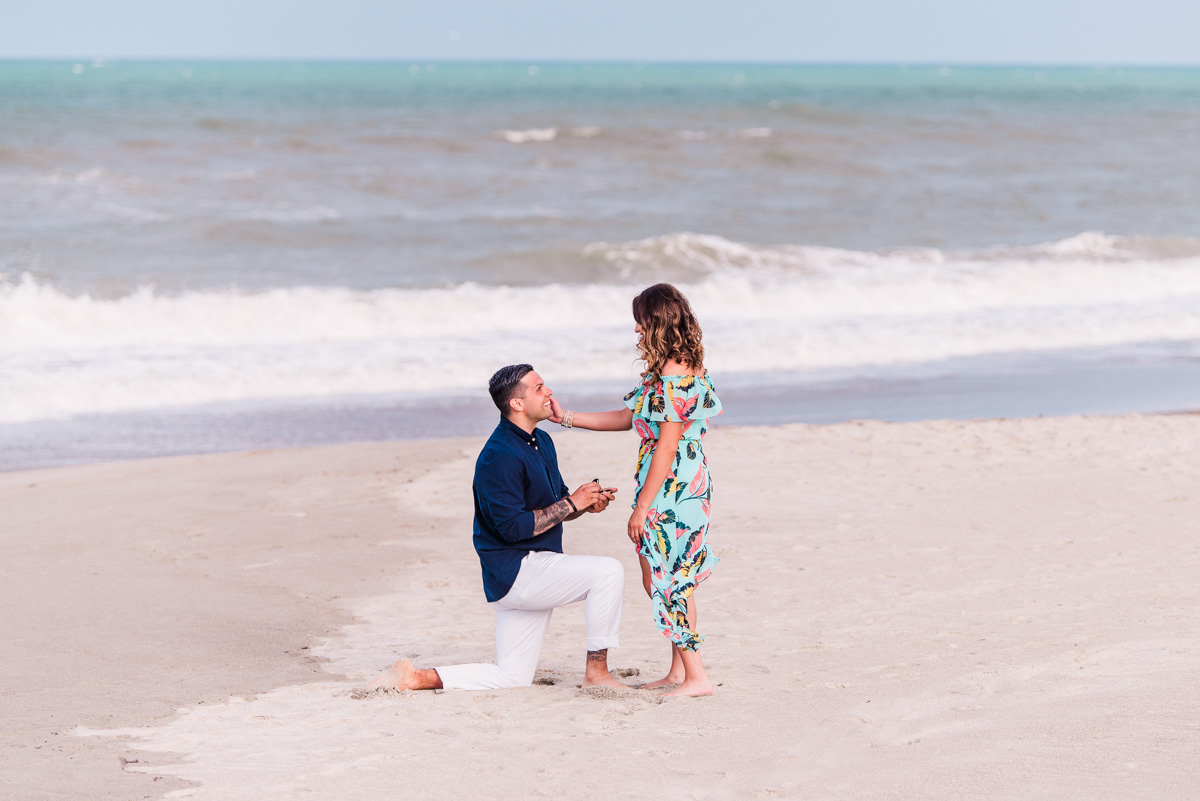
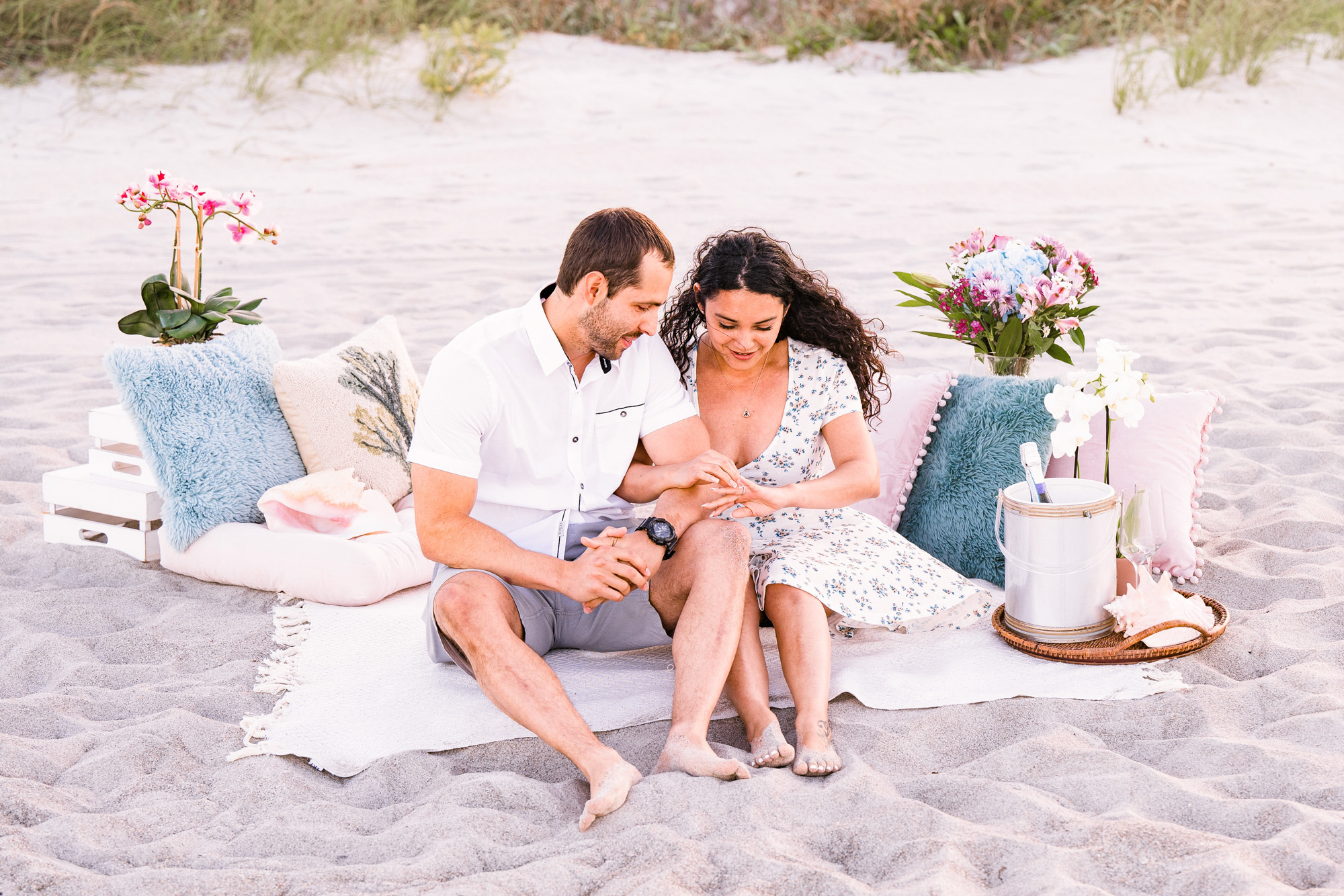
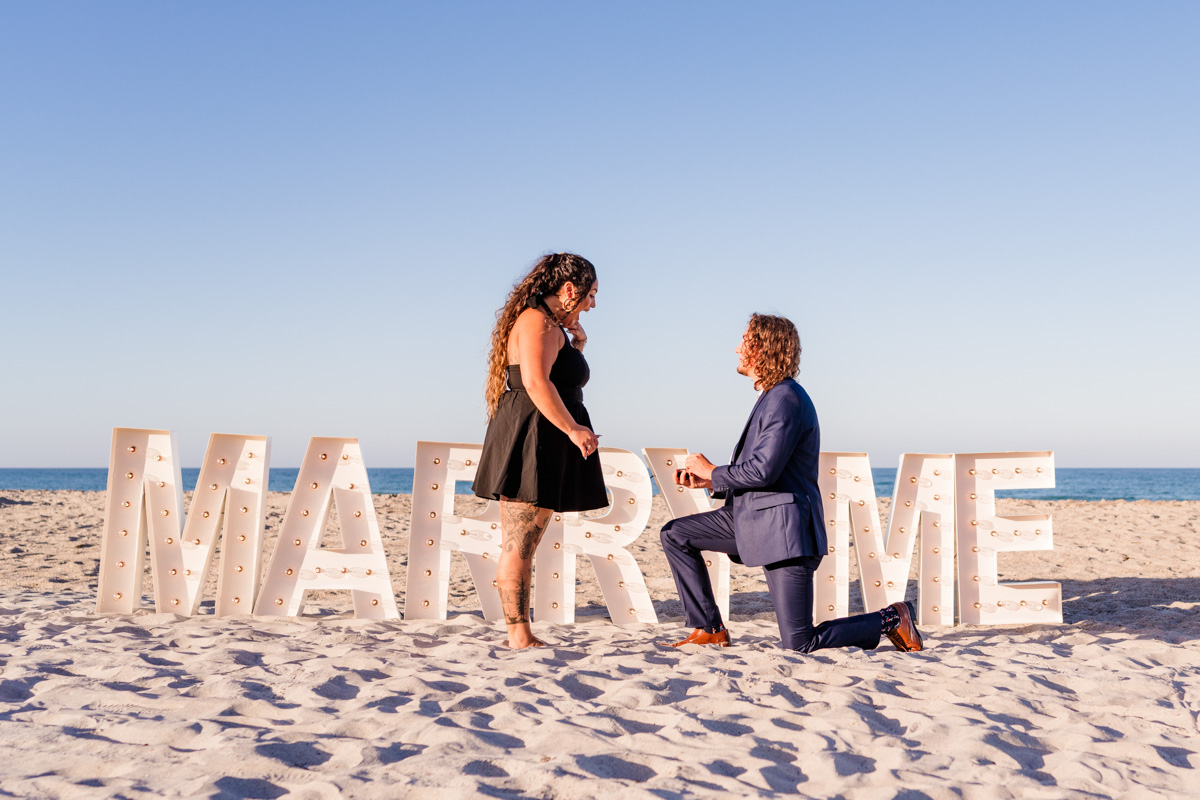
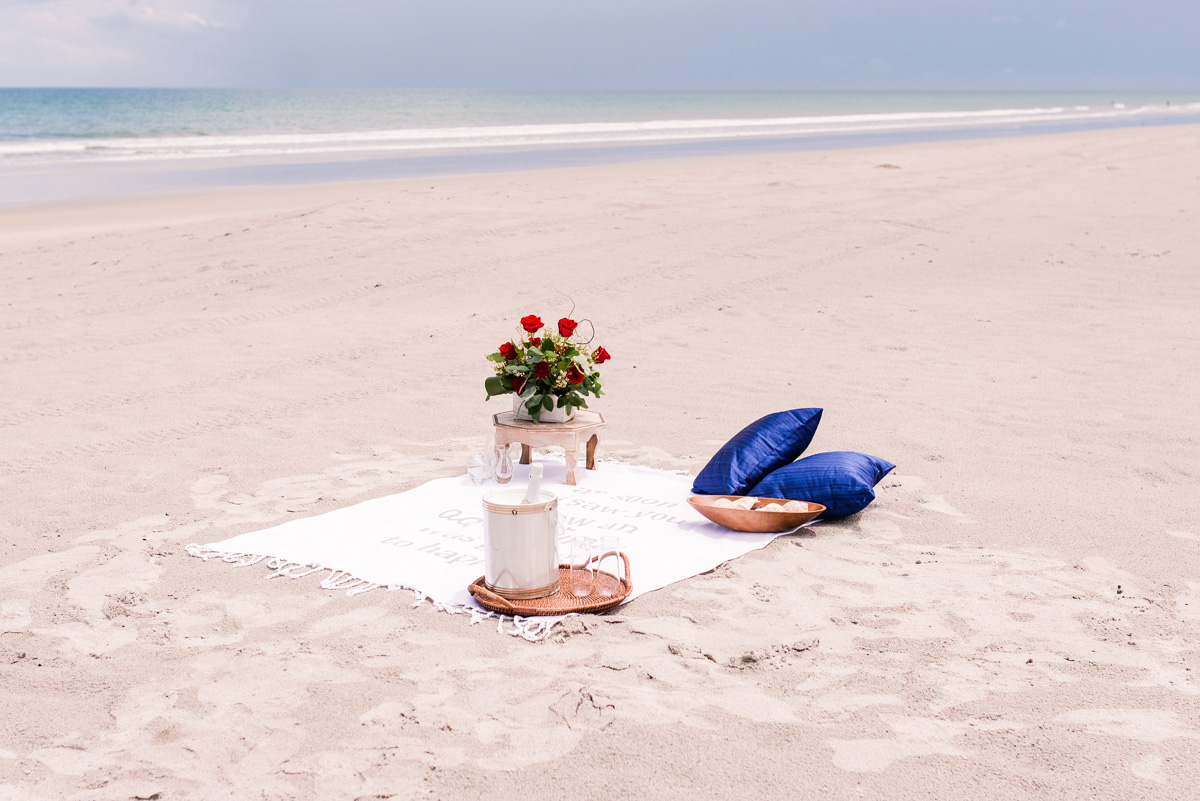
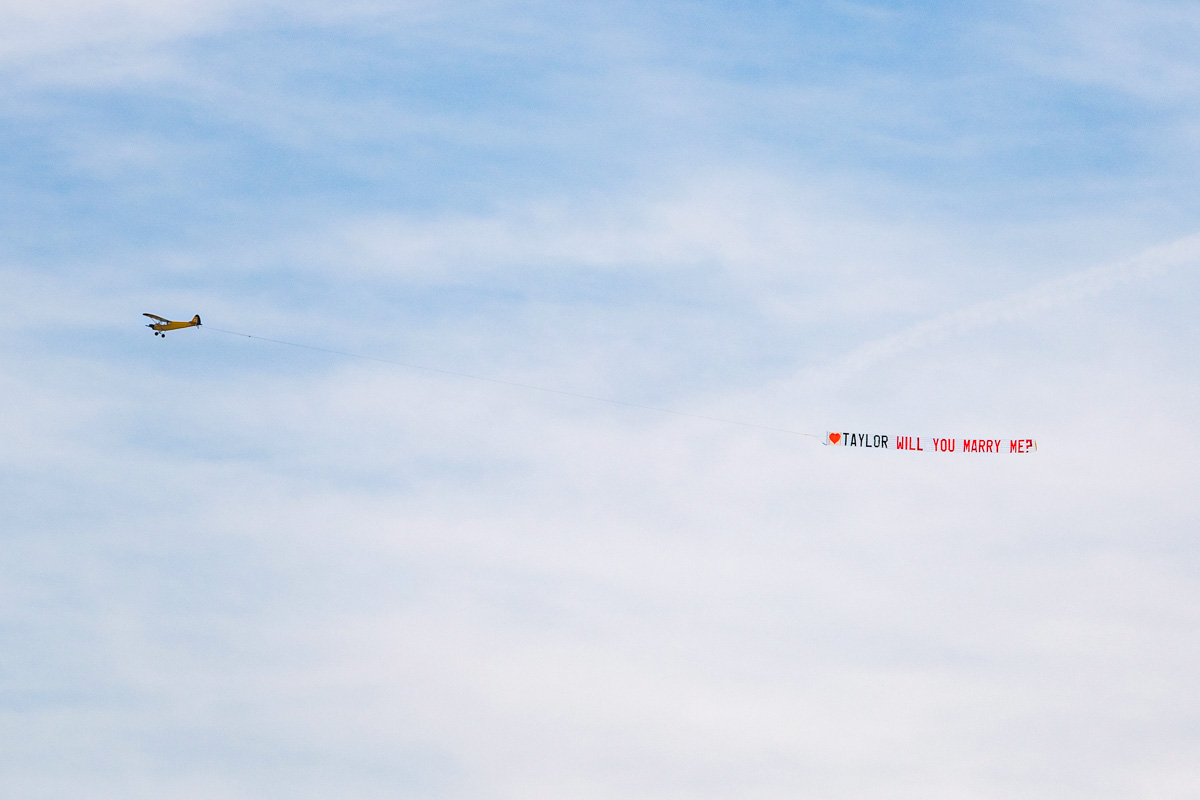
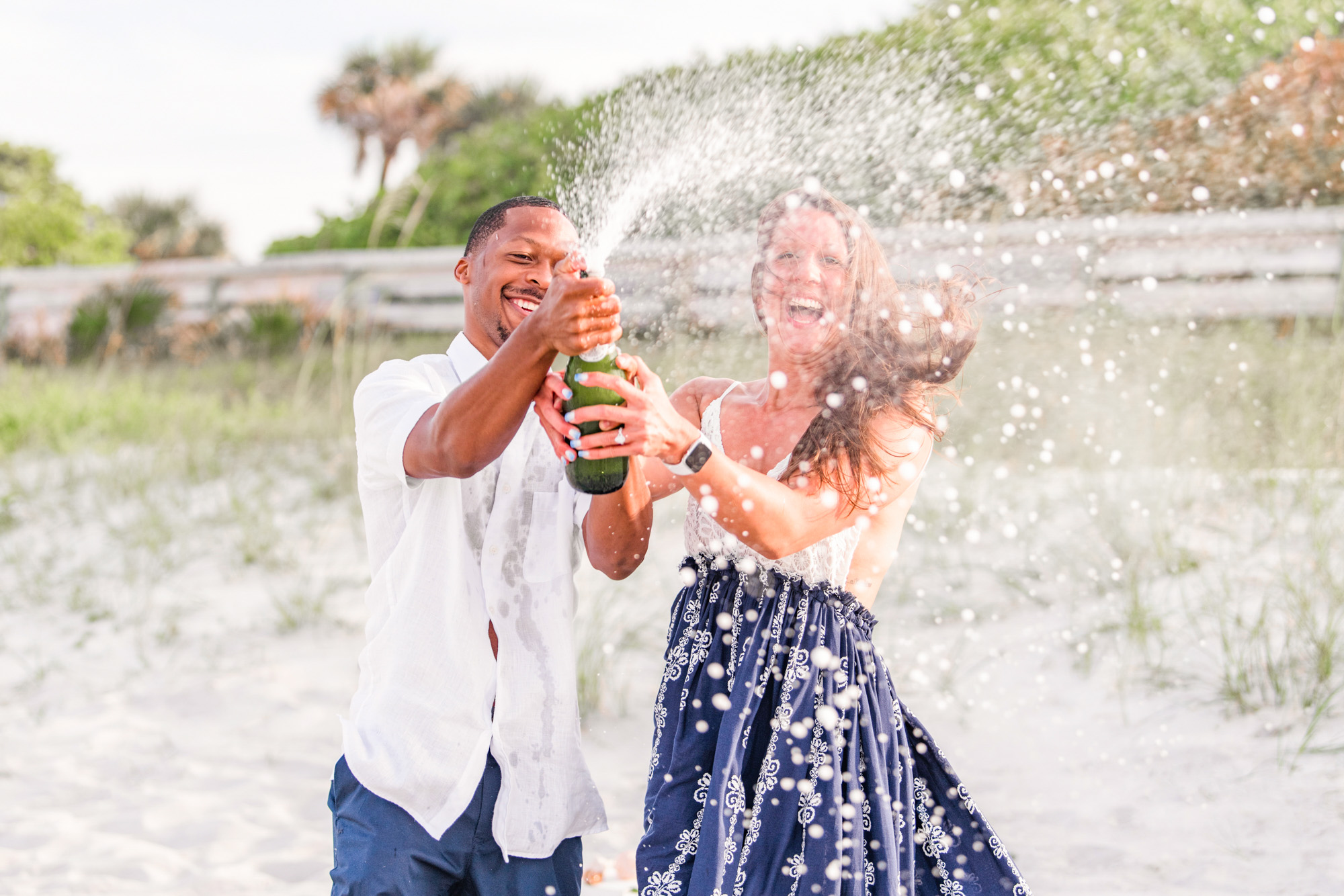
The second wants a production. Over the years I’ve photographed proposals with a plane flying overhead trailing a WILL YOU MARRY ME banner, a heart of rose petals laid out on the sand, giant marquee letters lit up at sunset, and flowers and champagne waiting at the water’s edge.
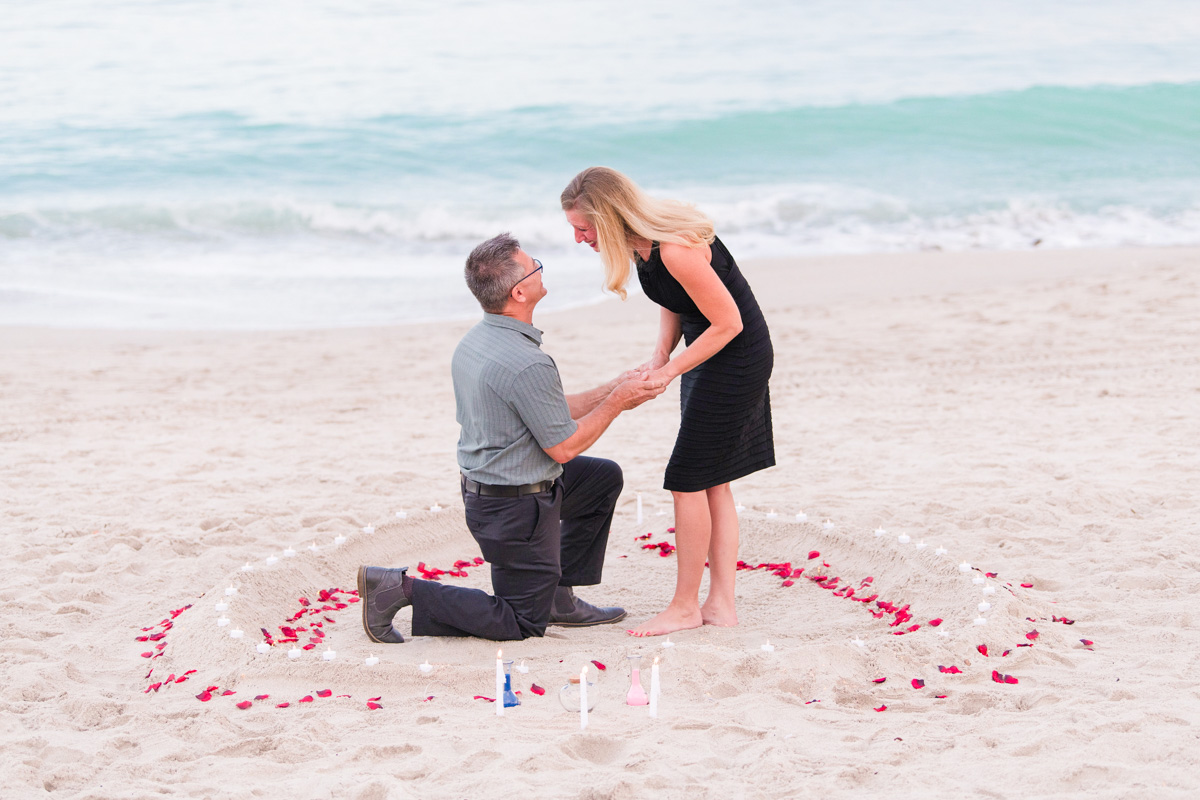
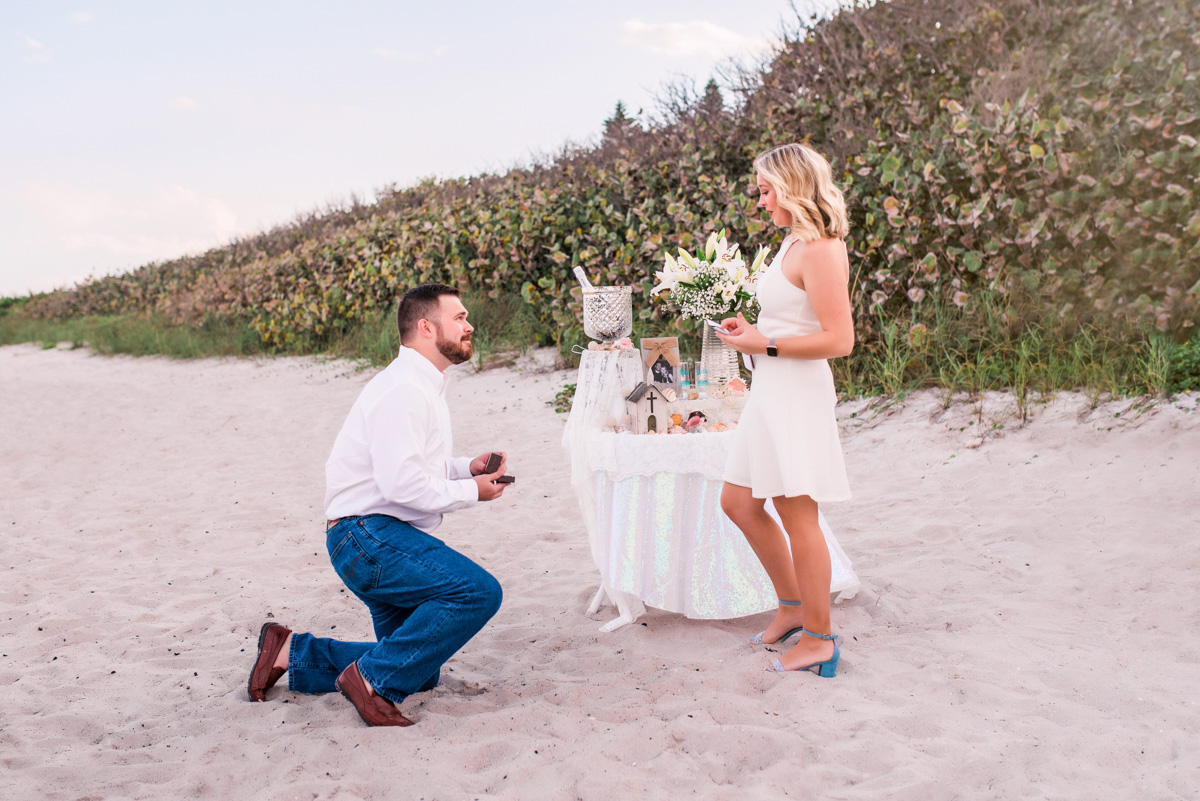
Neither is better. What matters is which one is right for the person you’re asking. Some people would love a crowd; others would be mortified by one and want the quiet version done beautifully.
If you want something set up, I can arrange flowers, champagne and a blanket waiting when you arrive, or quote something more elaborate. If you’d rather build it yourself, plenty of people do — just tell me what you’re planning so I can position myself for it.
4. Book earlier than feels necessary
Weekends go first, and sunset slots go before sunrise ones. During wedding season and over the holidays, December weekends are often gone weeks ahead.
If you have a date in mind — an anniversary, a holiday, the week their family is in town — reach out before the ring is even ready. It’s much easier to hold a date and firm up the details later than to find out your Saturday is taken.
5. How the hiding actually works
This is what people worry about most, so let me put it plainly: they will not spot me.
I’ll be at a distance with a long lens, in position well before you arrive, looking like any other person on the beach. No tripod in the middle of the path, no camera bag at your feet, no eye contact as you walk up.
We agree on a signal beforehand — usually something small, like which direction you’ll walk from, or a hat, or the color of your shirt — so I know it’s you among everyone else on the sand. After that I disappear, and you walk your person into the moment you planned.
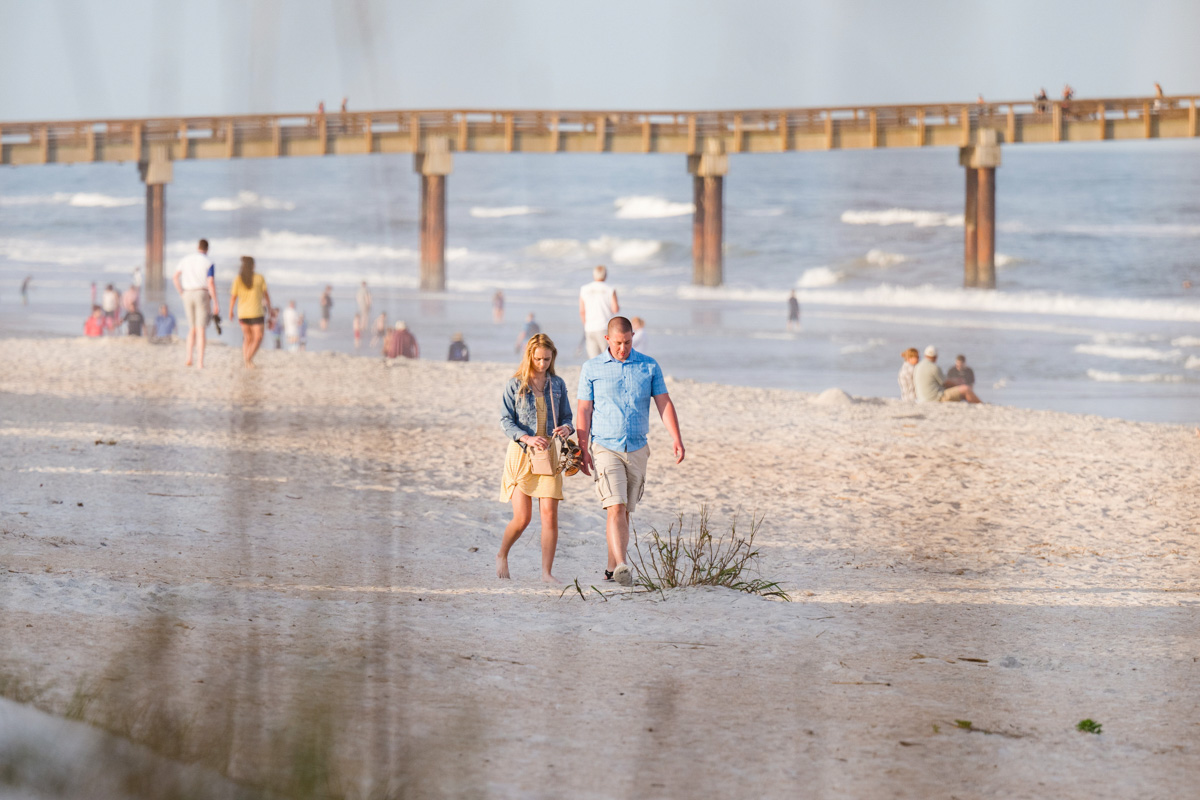
One small thing that helps: know roughly where you want to stop. Not to the inch — just “somewhere near the lifeguard stand” rather than “on the beach.” It means I’m framing you against the water rather than the parking lot.
6. Getting them there, dressed
The logistical problem nobody warns you about: how do you get someone to the beach at golden hour, looking nice, without them wondering what’s going on?
The dinner reservation is the classic answer, and it works. Book somewhere they’d dress up for, and suggest a walk on the beach beforehand because you’ve got time to kill.
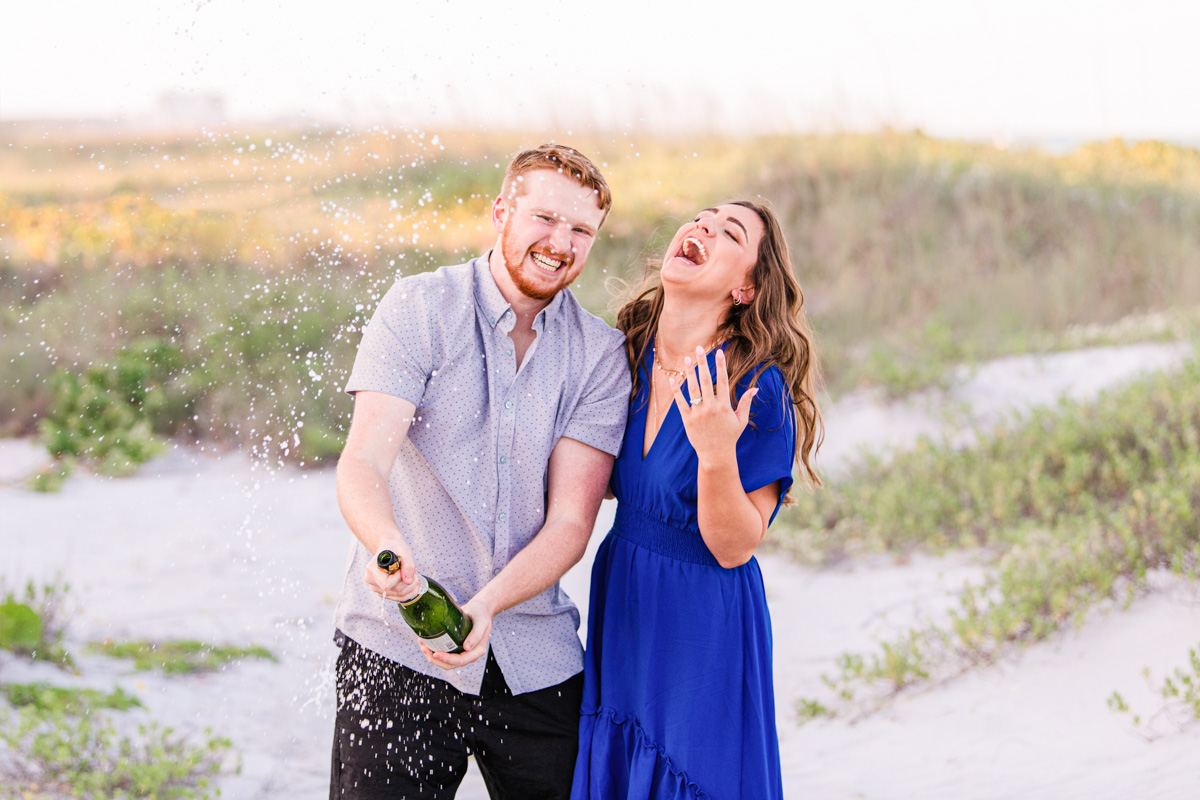
Other things that have worked: a friend’s birthday drinks afterward, a family photo session that turns out to be something else, or simply “let’s go watch the sunset” if that’s a normal thing you do.
Whatever you use, think about shoes. Sand and heels don’t mix, and you don’t want their first ten minutes as an engaged person spent trying not to fall over.
7. What if it rains
Florida rain usually passes in twenty minutes.
We’ll obsessively watch the forecast together in the days beforehand, and if it looks like it’ll clear we simply shift by an hour. If it truly settles in, we move to another day or find a covered spot — and I’ll say honestly that in all the proposals I’ve photographed, I’ve almost always found a break in the weather long enough to get outside.
The light right after rain is some of the best you’ll ever see, so occasionally the plan going wrong makes the pictures better.
8. What happens afterward
Here’s the part I care most about.
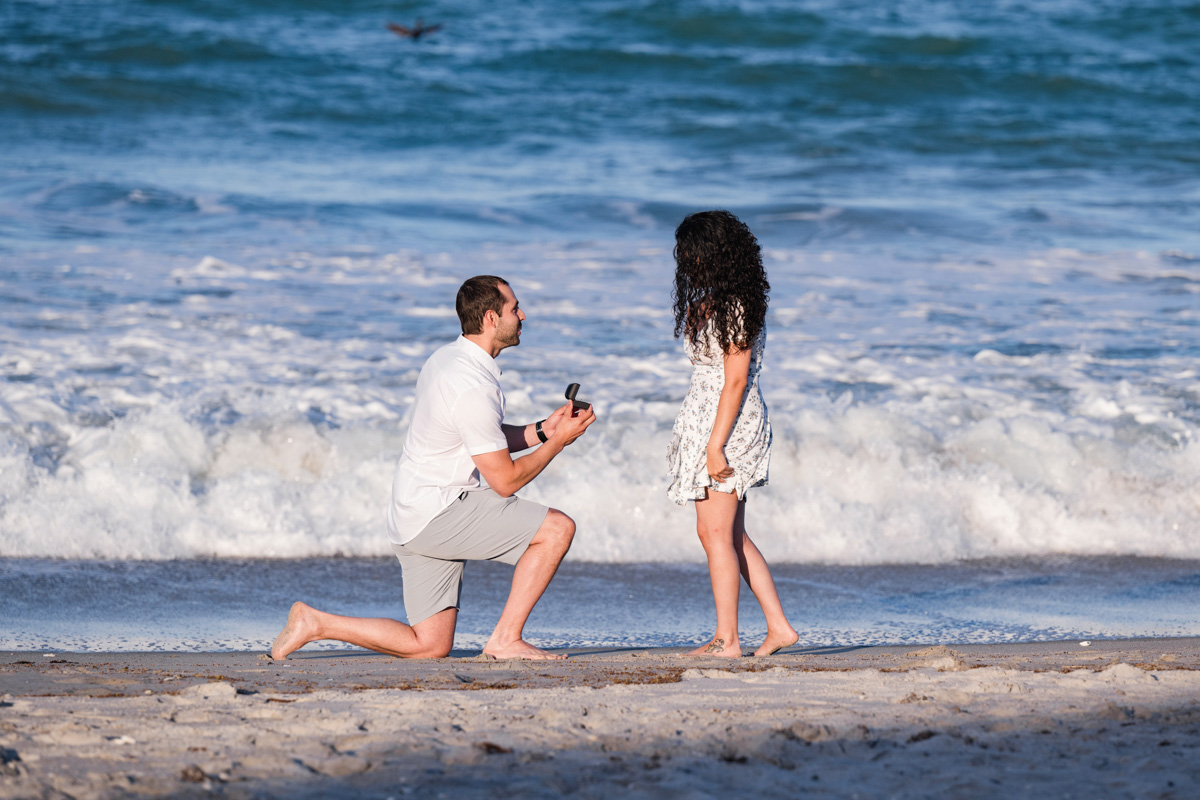
I text you the on-one-knee photo the night it happens. Not in a week — that night, while you’re still calling people and they’re still looking at their hand. Everyone is going to ask to see it, and you shouldn’t have to say “the photographer’s sending them eventually.”
Your full gallery follows within a few days, fully edited, in color and black and white, with a print release so you can share and print them however you like.
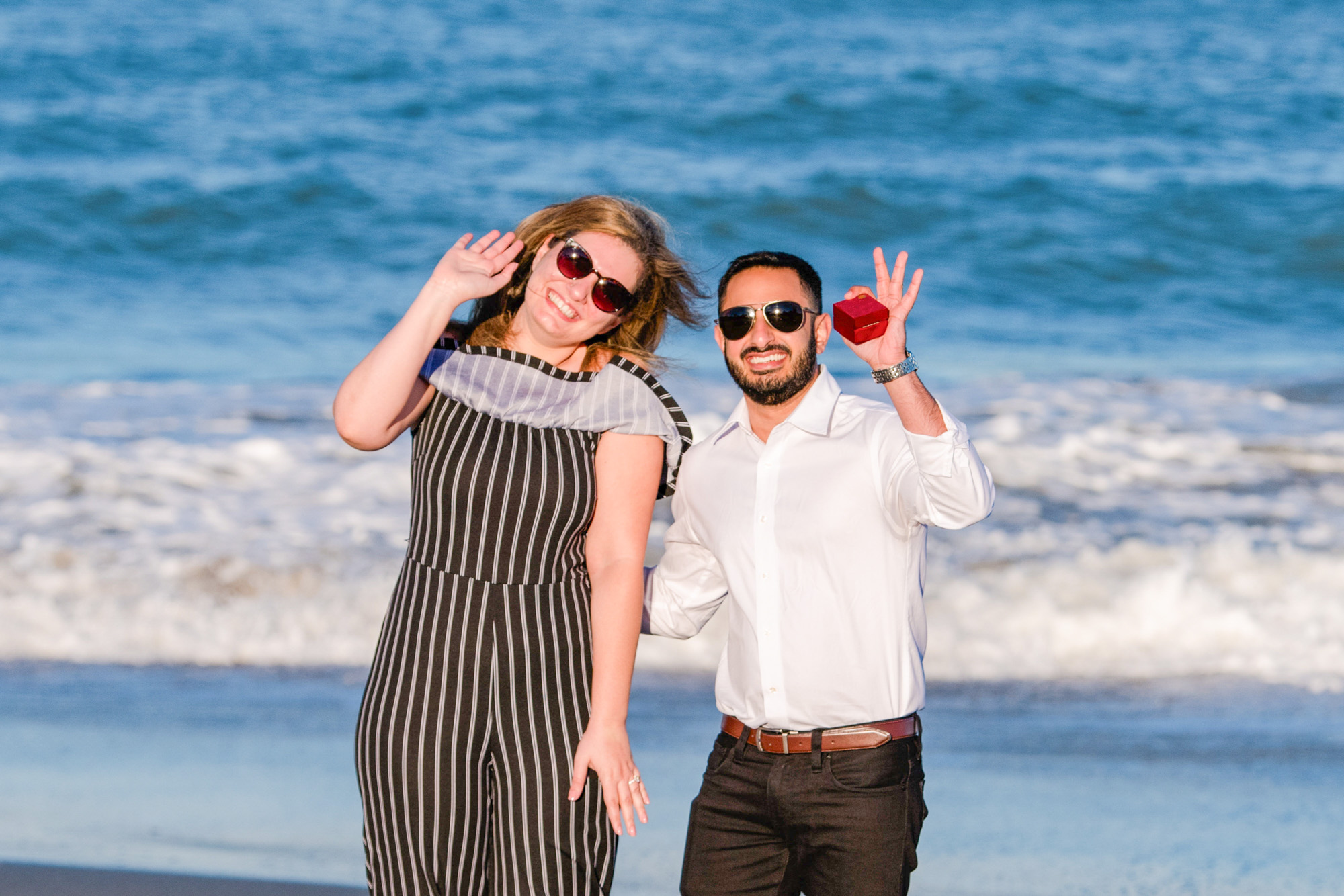
And if you’ve got family hiding at a distance — which happens more than you’d think — we’ll do a few photographs with everyone once the surprise is over. Bring them out. Those are lovely.
Planning a Beach Proposal?
If you’re planning to propose on a beach anywhere between Cocoa Beach and Vero, I’d love to help you think it through. Tell me what you’re picturing, even if it’s only half an idea.
Want to see what an actual surprise proposal looks like from start to finish? See this Cocoa Beach proposal.
See how a proposal session works →